

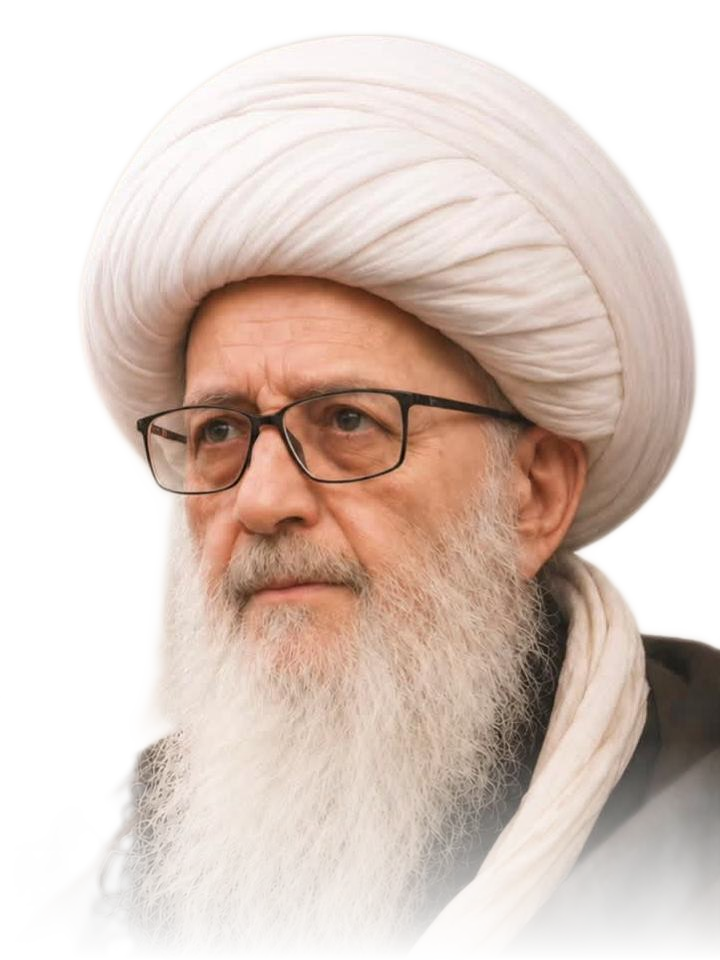
The Grand Āyatullāh Shaykh Ḥusayn Waḥīd Khurāsāni
Today, I feel like I have lost my father again. The Grand Āyatullāh Shaykh Ḥusayn Waḥīd Khurāsāni (may Allāh elevate his status) was a teacher who left a lasting impression on my mind as a guide to understanding the authentic perspective of Shī‘a Islam.
I begin by extending my deep condolences to our Saviour, the Imām of the Time (a), and to the great Marāji‘, and the family and students of the great scholar and teacher.
Āyatullāh Waḥīd Khurāsāni belonged to the generation of scholars trained in Najaf under prominent scholars, especially the great teacher of the last century, the Grand Āyatullāh Sayyid Abul Qāsim al-Khū’i. All the marāji‘ of Najaf were trained in the school of Āyatullāh al-Khū’i, whose impact was also felt in the ḥawza of Qum through the Grand Āyatullāh Waḥīd Khurāsāni.
Āyatullāh Waḥīd Khurāsāni was indeed among those jurists described by the Imām (a) as “صائنا لنفسه the one who has full control over his self, حافظا لدينه protector of his faith, مخالفا لهواه resisted his own desires, and مطيعا لامر مولاه was obedient to his master (the Imam), then the people should follow him.”
By the mid-seventies, Āyatullāh Waḥīd Khurāsāni’s dars-e khārij had the most students. I remember that when I attended his fiqh dars-e khārij in Masjid Salmāsi, I often saw many senior scholars who later held prominent positions in the ḥawza and religious organizations. Today, most who teach dars-e khārij in Qum are students of Āyatullāh Waḥīd Khurāsāni, such as Sayyid Muḥammad Jawād ‘Alawi Burujurdi, Sayyid ‘Ali al-Milāni, Shaykh Muḥammad Ridā al-Anṣāri, Āyatullāh A‘rafi, Āyatullāh Sayyid Munīr al-Khabbāz and others.
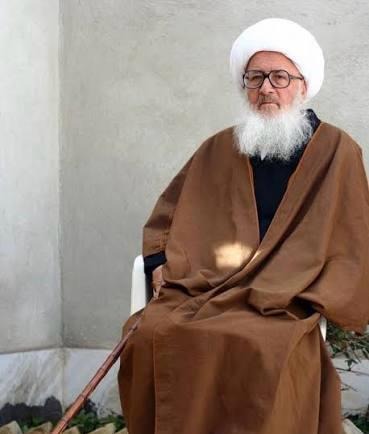
One unique aspect of his lectures was that on important occasions when the next day would be a holiday (for the wilādat, wafāt, or Ghadīr, etc.), he would spend the last quarter of the hour talking about the event to be observed the next day. Those occasional short talks were very informative and beneficial to the students; he would discuss the personality or the theological aspects of the event to be observed and also impart valuable advice for the purpose of tabligh.
Fortunately, the late ‘Allāmah Shaykh ‘Ali al-Kūrāni al-‘Āmili gathered some of those short talks from the recordings and transcribed them in Arabic in a subject-wise form. He named it Al-Ḥaqq al-Mubīn fī Ma‘rifat al-Ma‘ṣūmīn (a), ‘The Clear Truth in Knowing the Infallible Ones.’ Its second edition was published in 2003/1424 and is 656 pages long.
A Story from His Life
Let me share with you an interesting story of his life which shows his intense belief in the wilayat of Amirul Mu’mineen (a). In one of his occasional talks, he narrated that once the late Āyatullāh Muḥsin al-Ḥakīm received complaints from Shī‘as of Kuwait about the radio program in which they were promoting the khulafā’ against the Ahlul Bayt (a). Āyatullāh al-Ḥakīm asked him to go to Kuwait and see what he can do.
In Kuwait, with the prominent Shī‘a of that city, he met the radio officials and requested them to abandon the controversial approach about the khulafā’, and not put down the Imāms of Ahlul Bayt (a). – They didn’t take this complaint seriously. So Āyatullāh Waḥīd asked the Shī‘a to organize a large gathering in which he will give a series of lectures on history: starting with the ‘Abbāsid caliphs and going back to Umayyad. The radio people became concerned that now he would go to the early caliphs. So they mellowed down, changed their approach and asked for a meeting with Āyatullāh Waḥīd.
He proposed that why don’t you bring a prominent scholar of yours and we have a friendly debate with him about our madhāhib. Kuwait did not have any prominent scholar, so they invited some from Jordan. This scholar was from Sunni Ash‘ari branch, following the Shāfi‘ī fiqh, and was a disciple of the spiritual shaykhs of Shāzili branch of Sufism. Āyatullāh Waḥīd, in his occasional talk, described the beginning of the debate, which he said was even recorded in audio form.
Normally, in these types of debates, both parties try to prove the truth of their leaders: The Sunnis will present Abu Bakr as the first true caliph of the Prophet and the Shī‘as will talk about Imam ‘Ali (a) as the first rightful successor of the Prophet. What Āyatullāh Waḥīd Khurāsāni did was unique – I have not yet seen such a bold approach in munāzarah and sectarian debates.
He did not talk about Imam ‘Ali (a). He said that I, Waḥīd Khurāsāni, claim that:
“I am more capable of managing the affairs of the ummah than your caliph Abu Bakr,
I am a better jurist/faqih than your Imam Shāfi‘ī, and
I am at a higher level of spirituality than your Shaykh Shāzili.
Come and debate me, and if you defeat me, then we can talk about my Imāms!”
One really needs full confidence in himself to place himself against the opponent’s caliph, jurist and spiritual master!
Of course, in a brief talk, he did not go into the details. I followed him after the lecture, and as we walked in the alley leading to the main road, I asked if we could get the audio cassettes. He replied that it was not the right time. (He refrained because of the furor of the wahdat that had prevailed at that time.)
His Legacy of Fāṭimiyyah
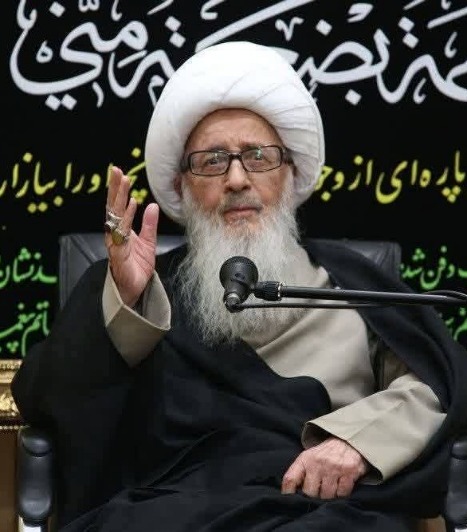
In the short talks he gave at the end of his lectures, his extraordinary devotion to the wilayat of Amīrul Mu’minin (a), special respect for Fāṭimatu ’z-Zahrā (a), and intense love for Imam al-Mahdi (a) were very pronounced. And so when the controversy emerged from Lebanon, where some tried to cast doubt on the suffering of Lady Fāṭimatu ’z-Zahrā (a), it was Āyatullāh Waḥīd Khurāsāni, with the support of the late Āyatullāh Fāzil Lankarāni, who took a public stand against that misguidance by urging the Shī‘a community to commemorate the shahādat of the Lady in a more forceful manner.
This is how the Shī‘as started commemorating the tragedy, now popularly known as Fāṭimiyyah, for at least three days, instead of holding only one majlis for that occasion. Āyatullāh Waḥīd Khurāsāni was also instrumental in asking then-President Muḥammad Khatami to declare the 3rd of Jumadi al-Ākhirah a public holiday so people could commemorate the tragedy more easily. Accordingly, this was passed by the parliament in 1999. It is quite a coincidence that his demise happened around the Fāṭimiyyah days of the Lady of Light, Fāṭimatu ’z-Zahrā (a). He was indeed a divine scholar, ‘ālim rabbāni, unwavering in his devotion to the Qur’ān and the Ahlul Bayt.
The loss of such a great scholar, in the words of Imām Ja‘far aṣ-Sādiq (a), creates a void in the fortress of Islam that can never be replaced. May Almighty Allāh shower His blessings on him, elevate his status and place him in the proximity of the Infallible Ones (a).




Leave A Comment